

“When the rain comes every afternoon, and the trout still rise, you learn quick what matters and what you can leave behind.”
There’s a certain kind of quiet you only get when you’re miles from the nearest road. It’s not just the lack of engines or voices — it’s the way the air feels unclaimed, the way your own footsteps sound out of place. For five days and four nights, my wife, my brother, and I carried everything we needed on our backs and followed a narrow ribbon of trail into the South San Juan Wilderness to fish one of its tucked-away creeks.
This wasn’t a trophy hunt. We weren’t chasing records or numbers. We were there for the rhythm — the hiking, the camp chores, the stubborn little fish that make you earn every strike.
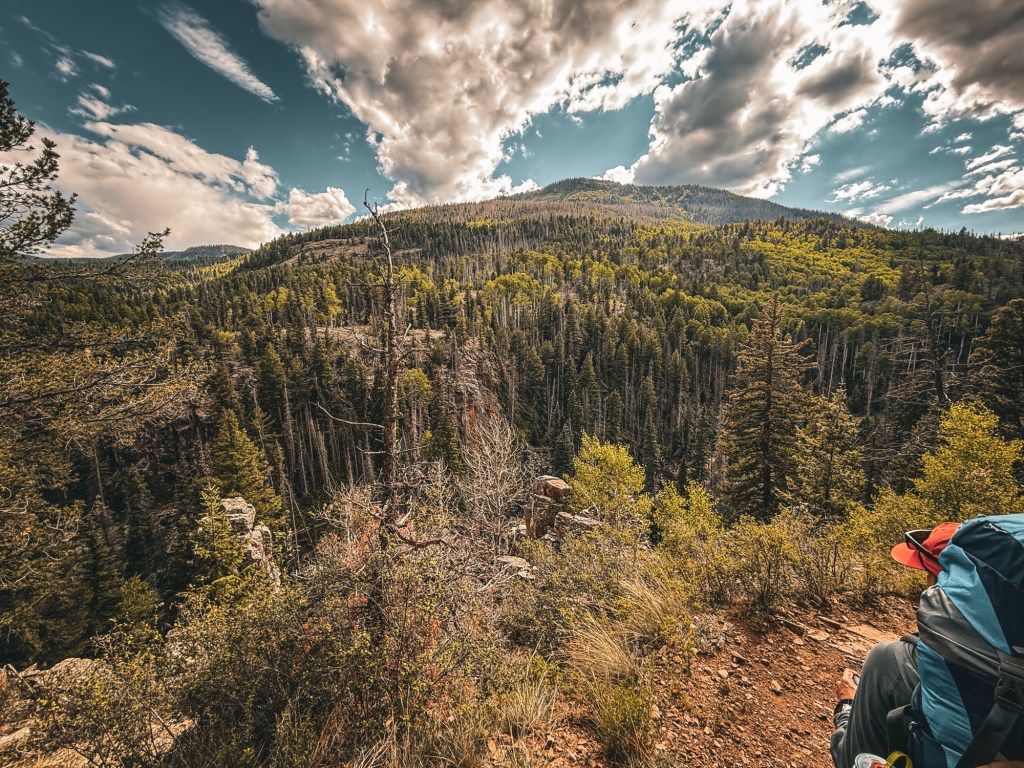
The Route & the Climb
We kept the mileage light — about 14 miles total for the whole trip — which gave us time to fish and explore without feeling like we were racing the trail. The climb out of the valley was steep in sections, but we’d stop often: sometimes to catch our breath, sometimes just because the light hit the mountains in a way that made us want to stand still and watch. By the second day, it felt like we were moving inside our own small world, our pace set by the creek and the weather instead of a clock.

Rain, Graupel, and Unplanned Pauses
If you spend enough time in the high country, you start to recognize the afternoon storm pattern: blue sky in the morning, clouds by lunch, rain by mid-afternoon. This trip didn’t follow the script. Rain came whenever it felt like it — a drizzle over breakfast, a sideways downpour in the middle of a promising run. Twice, the clouds even dropped graupel — tiny ice pellets that bounced off our jackets and hissed on the creek’s surface, like the mountains were flicking pebbles at us.
We learned quickly to be opportunists: fish hard when the sky was clear, keep a rain jacket within arm’s reach, and accept that sometimes the best decision was to sit under a spruce and watch the storm burn itself out.

Low Water, Spooky Fish
This year’s creek was thin and glassy, the kind of water where your shadow alone could blow a hole in a pool. The trout were edgy — one misplaced step and the whole run would go silent. But that’s the challenge of late-summer fishing in the backcountry. We downsized our approach until it felt almost surgical: a small midge dropped under a dry, light tippet, short drifts in the soft edges of the current.
We didn’t rack up numbers — maybe six fish between the two of us who fished — but each one was perfect in its own way. Deep orange fins. Small speckles scattered like constellations. When you know the odds are against you, even a single rise feels like a win.
Encounters Along the Way
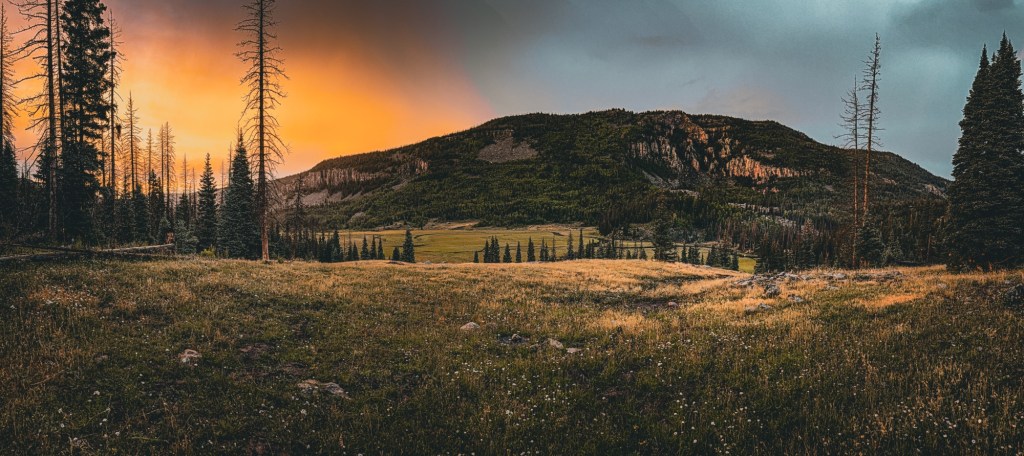
Wildlife out here doesn’t always come charging into view — most of it slips in quietly if you’re paying attention. We spotted mule deer moving through the meadows in the cool mornings, a few curious marmots sunning themselves on boulders, birds of prey riding thermals overhead, and plenty of fresh elk sign. Even without seeing one, you could feel their presence in the landscape.
The Reward in the Work
Backcountry trips don’t feel like vacations. They’re a mix of sore feet, damp clothes, and problem-solving on the fly. You work for everything — water, warmth, shelter — and that work changes the way you experience the place.
For me, the best part wasn’t the fish (though they were beautiful) or the scenery (which was almost too much to take in at times). It was the shared effort. Cooking under the tarp with rain hammering above us. Trading jokes on the trail to make the climbs easier. Handing over the first cup of coffee in the morning before the day had decided what it was going to throw at us.
That’s the thing about the South San Juan — it’ll make you work, but if you bring the right people with you, the work turns into something you’ll want to do all over again.
Have you fished remote backcountry streams in bad weather? Did the fish change their behavior — or was it you who had to?
Gear Notes
• Rod, Reel & Line: 9’ 5-weight, floating line for versatility in variable conditions.
• Leader/Tippet: 9’ 5x leader with 6x fluorocarbon for the dropper to keep drifts subtle.
• Flies: #20–22 midges under a #14–16 dry (Parachute Adams or small Stimulator). The dry-dropper rig kept the presentation natural and gave us a visual on subtle takes.
• Rain Gear: Lightweight shell that stayed in the top of the pack for quick grabs — essential for those graupel blasts.
• Camp Essentials: Compact stove, Lightweight Bivy Tent, Backpacking Tarp for cooking during storms/gear tent, and a good water filter (even the clearest creeks can hide trouble).
This post may contain affiliate links, which means I may earn a small commission at no extra cost to you. I only recommend gear I’ve tested and trust, and these commissions help support the blog.
 Summit and Stream
Leave a comment